
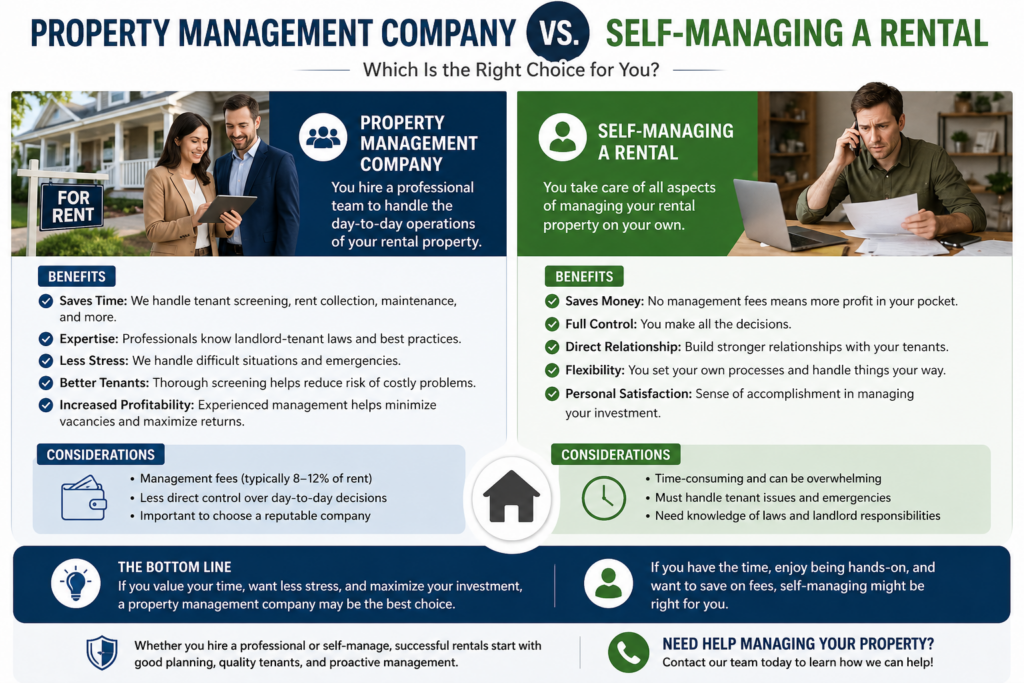
Every Indianapolis rental property owner eventually faces the same question: is it worth hiring professionals to manage your investment, or is hands-on self-management the smarter move? The answer depends on your time, expertise, portfolio size, and long-term goals — and it is rarely one-size-fits-all. To fully understand what each path demands and delivers, explore this comprehensive comparison of a property management company vs. self-managing a rental before you decide. This guide focuses specifically on what landlords in the Indianapolis market need to know heading into 2026.
Indianapolis Rental Market Conditions Shape Your Management Strategy
Indianapolis continues to rank among the Midwest’s most resilient rental markets. Strong job growth, steady population gains, and affordability relative to coastal cities have sustained high demand for rental housing across Marion County and surrounding suburbs like Carmel, Fishers, and Greenwood. That is good news for landlords — but it also raises the stakes for how professionally your property is run.
In a competitive rental market, well-priced and well-maintained properties lease quickly. Poorly managed ones still sit vacant, quietly eroding your returns. The property management decision is not just about personal convenience — it is a direct variable in how your Indianapolis rental investment performs year over year.
- Vacancy is expensive: Even a 20-day vacancy on a $1,500/month rental represents $1,000 in lost income before accounting for turnover costs.
- Tenant quality is everything: A high-demand market generates more applicants, but only landlords with systematic screening processes can consistently select the best ones.
- Maintenance responsiveness drives lease renewals: Indianapolis tenants in 2026 expect timely repairs and professional communication. Slow responses lead to non-renewals and costly turnovers.
Whether you self-manage or partner with a professional firm, your approach must match the pace and expectations of the Indianapolis rental market.
A Property Management Company Absorbs What Self-Managing Landlords Must Handle Alone

The most fundamental difference between professional management and self-management is the distribution of operational responsibility. A property management company takes over every task involved in running a rental — while a self-managing landlord carries those same responsibilities personally, around the clock, every day of the year.
Here is how the division of labor compares across the most critical areas of rental operations:
| Responsibility | Property Management Company | Self-Managing Landlord |
|---|---|---|
| Tenant Marketing & Advertising | Multi-platform listings, professional photography, market-rate pricing analysis | DIY listings; estimated $200–$500 per vacancy in listing and photography costs |
| Tenant Screening | Standardized credit, background, and rental history checks with consistent criteria | Self-sourced reports at $30–$100 per applicant; higher risk of inconsistency or bias claims |
| Lease Drafting & Legal Compliance | Indiana-compliant leases updated with current landlord-tenant law requirements | Landlord must research, draft, and update independently; legal gaps are common |
| Rent Collection | Automated collection platform, late fee enforcement, and delinquency tracking | Manual collection with potential for awkward landlord-tenant dynamics |
| Maintenance Coordination | 24/7 vendor network with emergency response protocols included | Landlord personally on-call; must independently vet, schedule, and oversee contractors |
| Legal & Eviction Management | Full eviction handling with proper Indiana notice requirements and court procedures | Landlord must navigate Indiana eviction law without professional guidance |
| Financial Reporting | Monthly owner statements and year-end tax summaries via an owner portal | Landlord manages all bookkeeping, records, and tax preparation support |
For landlords with full-time careers, families, or multiple properties, carrying the entire right-hand column is not just demanding — it is effectively a second job. At Discover Properties, LLC, our full-service model is built specifically to absorb this operational load on behalf of Indianapolis investors, so their rentals run smoothly without consuming their personal time.
The True Cost of Each Approach Goes Well Beyond the Management Fee
Self-managing appears less expensive on paper. Without a monthly management fee, it can seem like the obvious choice for cost-conscious landlords. But a complete financial comparison reveals a more complicated picture once you factor in vacancy length, time value, and legal exposure.
| Cost Factor | Professional Management (Est.) | Self-Management (Est.) |
|---|---|---|
| Monthly management fee | 8–12% of monthly rent | $0 |
| Tenant placement fee | $500–$1,000 (one-time per placement) | $200–$500 (DIY listing fees and screening costs) |
| Average vacancy per turnover | 15–25 days | 30–45 days |
| Landlord time per month | 2–3 hours (oversight only) | 10–15 hours per property |
| Property management software | Included in management services | $50–$200 per month for third-party platforms |
| Legal consultation (as needed) | Expertise included in management scope | $200–$400 per hour for attorney consultations |
| Cost of a single eviction | Handled within management agreement | $3,000–$10,000 in lost rent, legal fees, and turnover costs |
On a $1,500/month Indianapolis rental, annual management fees typically run $1,440–$2,160. A single extended vacancy — just 30 extra days compared to a professionally managed turnover — costs $1,500 in lost rent alone. One mishandled eviction can easily exceed several years of management fees. It is also worth noting that property management fees are fully tax-deductible as a Schedule E operating expense, reducing the real out-of-pocket cost for most investors.
When Does Hiring a Property Manager Deliver the Strongest ROI for Indianapolis Landlords?
Professional property management is not the right fit for every landlord — but for a large portion of Indianapolis rental property owners, the return on investment is clear and measurable. These are the scenarios where partnering with a management company consistently produces better financial and operational outcomes than going it alone:
- You own more than one rental property. Managing multiple properties compounds every operational task. At 10–15 hours per property per month, three rentals demand the equivalent of a part-time job — with no paid time off.
- Your rental is more than 30–50 miles from where you live. Long-distance landlords face significant challenges coordinating showings, property inspections, and emergency repairs without local presence on the ground.
- You hold a demanding full-time job. Tenant calls, maintenance emergencies, and lease renewals do not follow business hours. Slow response times hurt tenant satisfaction and directly reduce lease renewal rates.
- You want to grow your investment portfolio. Delegating day-to-day management frees you to evaluate new acquisitions and expand your Indianapolis rental footprint without being bottlenecked by operational demands.
- You are unfamiliar with Indiana landlord-tenant law. Fair housing compliance, proper security deposit handling, and eviction procedure requirements all carry serious legal and financial consequences when mishandled.
- Your property has experienced recent turnover, vacancy, or problem tenants. A professional management team brings the screening systems and processes needed to break that cycle and stabilize performance.
What Indianapolis Landlords Risk When Self-Managing Without the Right Systems in Place
Self-management can work well — but only when landlords have the time, tools, and legal knowledge to execute it consistently. Without those foundations, the risks can accumulate quickly and quietly until a significant problem surfaces.
- Fair Housing Violations: Unintentional discriminatory language in rental listings or inconsistent screening criteria can trigger federal investigations. Penalties for first-time violations can exceed $50,000 under HUD enforcement guidelines.
- Security Deposit Disputes: Indiana law governs exactly how and when security deposits must be returned and itemized. Missed deadlines or improper deductions frequently lead to small claims court — where landlords may owe two to three times the deposit amount in statutory penalties.
- Habitability Claims: Delayed responses to maintenance requests affecting tenant health or safety open the door to rent withholding, lease termination, or constructive eviction claims.
- Lease Agreement Gaps: Generic or outdated lease templates may lack required Indiana-specific disclosures — including lead paint, mold history, and local rental ordinances — creating legal vulnerabilities that are difficult to remedy after the lease is signed.
- Burnout and Deferred Maintenance: Self-managing landlords are on-call around the clock. Over time, delayed responses and deferred maintenance become a pattern that damages both property condition and the landlord-tenant relationship.
At Discover Properties, LLC, we work with Indianapolis investors who have experienced each of these situations firsthand. Building the right processes from the start is always less costly than recovering from problems that proper management would have prevented.
Make the Management Decision That Matches Your Investment Goals
The best property management approach is the one that aligns with your time, expertise, and investment objectives. Self-management offers cost savings and direct control, and it works well for landlords who have the skills, availability, and systems to do it right. Professional property management delivers operational efficiency, legal protection, and scalability — and it pays for itself most clearly for landlords who are busy, growing, or managing from a distance.
If you own rental property in Indianapolis and want an experienced, licensed partner to maximize your returns while protecting your investment, Discover Properties, LLC is ready to help. Call our main office at 317-254-8888 or contact our team online to discuss your portfolio and investment goals today.
Frequently Asked Questions
How much do property management companies charge in Indianapolis?
Most Indianapolis property management companies charge between 8–12% of monthly rental income, plus a one-time tenant placement fee typically ranging from $500 to $1,000. Some firms also charge lease renewal fees or maintenance coordination markups. Always review the full fee schedule before signing a management agreement.
Is it worth hiring a property manager for just one rental property?
Yes, in many cases. Single-property owners who hold full-time jobs, live at a distance from their rental, or have limited experience with Indiana landlord-tenant law often find that professional management pays for itself — particularly by reducing vacancy periods and preventing costly legal mistakes.
What does a property management company actually do?
A full-service property management company handles tenant marketing, screening, lease drafting, rent collection, maintenance coordination, financial reporting, and eviction management on the property owner’s behalf. Discover Properties, LLC in Indianapolis manages every aspect of rental operations so investors can focus on growing their portfolios rather than running them day-to-day.
Can I switch from self-managing to professional management at any time?
Yes. Most property management companies can assume management during an active lease or at turnover. Transitioning mid-lease requires notifying your existing tenant of the new management contact. A professional firm will typically conduct an onboarding inspection and review your existing lease before taking over operations.
What are the tax benefits of hiring a property manager in Indianapolis?
Property management fees are fully tax-deductible as a rental operating expense on Schedule E of your federal tax return. This reduces your taxable rental income and lowers the effective out-of-pocket cost of professional management — particularly beneficial for landlords in higher income tax brackets.
How do I choose a property management company in Indianapolis?
Look for a licensed, insured firm with strong local market knowledge and a demonstrated track record in the Indianapolis area. Key evaluation factors include their tenant screening standards, maintenance vendor network, owner portal technology, fee transparency, and client references. Discover Properties, LLC has served Indianapolis and surrounding area markets with a foundation of integrity, ethics, and a strong work ethic since our founding.